Hardware Token Management Platform
Hardware Token Management Platform
Hardware Token Management Platform

Industry:
Industry:
Finance,
Finance,
Finance,
B2B
B2B
B2B
Year:
Year:
2025
Deliverables:
Deliverables:
Web app
Web app
Web app
Reflection & Learnings
Reflections & Learnings
Strengths:
Speed and pragmatism: Delivered a complete, validated design system in just one month by leveraging existing PlatView patterns and focusing on high-impact features first
User-centered within constraints: Incorporated stakeholder insights and validated designs through post-creation usability testing
Technical problem-solving: Turned API limitations into design opportunities rather than blockers
Challenges:
Compressed timeline: One month limited opportunities for multiple design iterations and extensive testing cycles
Technical dependencies: Designing around API constraints required constant communication with developers to understand what was feasible
Balancing user roles: Creating distinct but cohesive experiences for BSOs, CSOs, and BSMs required careful attention to information architecture
Key Learnings:
Design for the humans behind the process: The comment feature request from CSOs reminded me that even automated workflows need space for human judgment and communication
Constraints drive creativity: API limitations forced me to design more thoughtful manual input flows that actually improved user control and error prevention
Alignment is everything: In complex enterprise projects, spending time upfront to align stakeholders on workflow logic prevented costly design revisions later
What I'd do differently:
Advocate for at least brief user shadowing sessions before design to observe CSOs and BSMs in their actual work environment
Build in more time for iteration cycles, especially for testing edge cases and error states
Create more robust design system documentation to ensure consistency as the platform scales
Strengths:
Speed and pragmatism: Delivered a complete, validated design system in just one month by leveraging existing PlatView patterns and focusing on high-impact features first
User-centered within constraints: Incorporated stakeholder insights and validated designs through post-creation usability testing
Technical problem-solving: Turned API limitations into design opportunities rather than blockers
Challenges:
Compressed timeline: One month limited opportunities for multiple design iterations and extensive testing cycles
Technical dependencies: Designing around API constraints required constant communication with developers to understand what was feasible
Balancing user roles: Creating distinct but cohesive experiences for BSOs, CSOs, and BSMs required careful attention to information architecture
Key Learnings:
Design for the humans behind the process: The comment feature request from CSOs reminded me that even automated workflows need space for human judgment and communication
Constraints drive creativity: API limitations forced me to design more thoughtful manual input flows that actually improved user control and error prevention
Alignment is everything: In complex enterprise projects, spending time upfront to align stakeholders on workflow logic prevented costly design revisions later
What I'd do differently:
Advocate for at least brief user shadowing sessions before design to observe CSOs and BSMs in their actual work environment
Build in more time for iteration cycles, especially for testing edge cases and error states
Create more robust design system documentation to ensure consistency as the platform scales
Outcomes & Impact
Outcomes & Impact
Built a production-ready design system in one month:
The accelerated timeline resulted in a complete, validated design ready for development handoff. All screens, flows, and interaction patterns were documented and approved by stakeholders.
Projected operational improvements:
95% reduction in token issuance time – from 24-48 hours to under 2 hours
Elimination of manual charge processing – saving CSO and FT team hours daily
Zero-error automated debiting through real-time CBA integration
Enhanced customer experience with real-time status updates and faster turnaround
Early validation through user testing:
Post-design usability testing with CSOs and BSMs confirmed the design was intuitive and addressed their core pain points. The positive feedback and actionable suggestions (like the comment feature) demonstrated user buy-in before development even began.
Strategic business value:
The successful design provided early validation for stakeholders and secured development resources. By consolidating token management into PlatView, the bank positioned itself for future scalability and reduced dependency on the legacy Entrust platform for operational workflows.
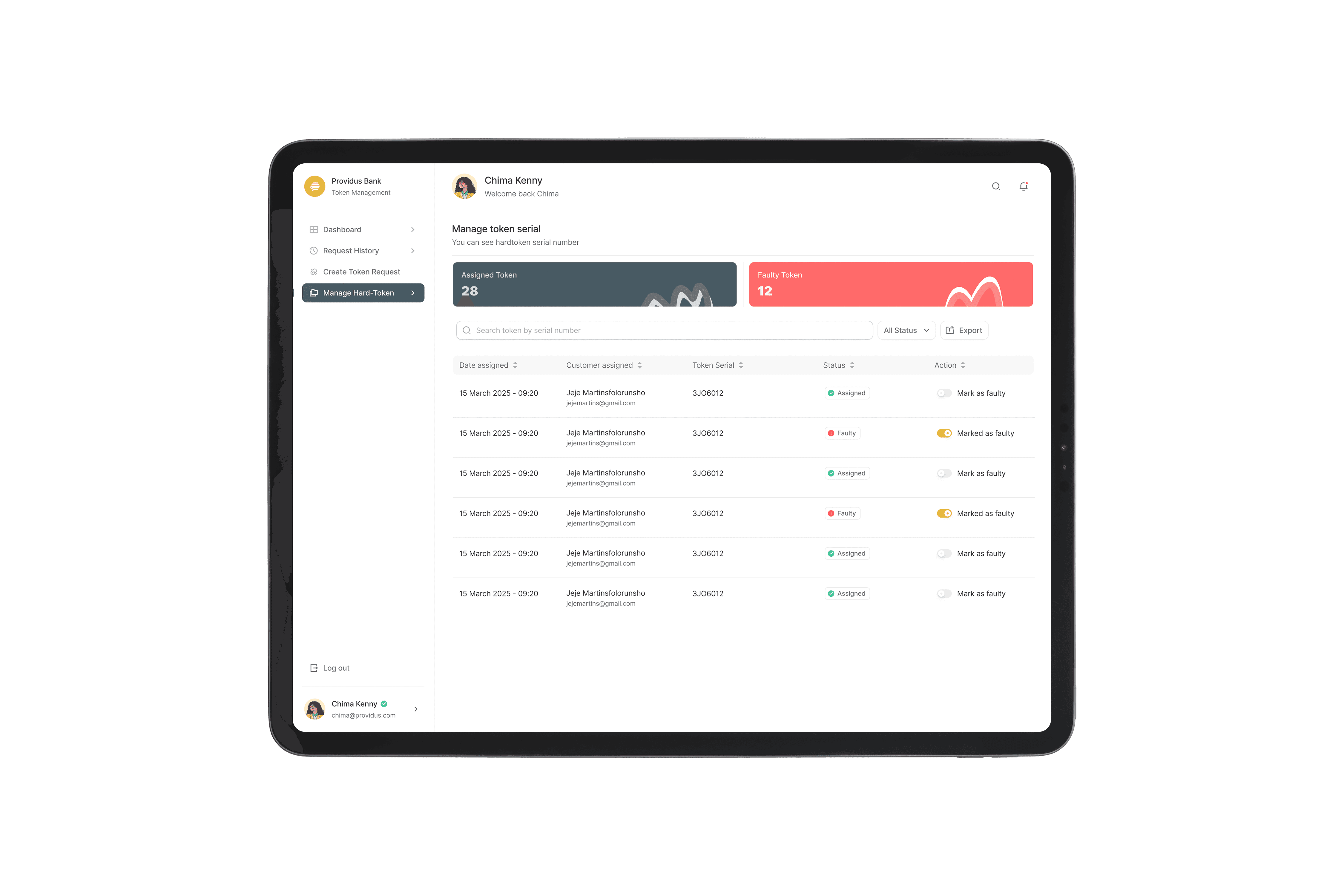
Progress Transparency
I added real-time status indicators that show background processes (charge deduction, notification sending) so BSMs understand what's happening even after they approve.
Built a production-ready design system in one month:
The accelerated timeline resulted in a complete, validated design ready for development handoff. All screens, flows, and interaction patterns were documented and approved by stakeholders.
Projected operational improvements:
95% reduction in token issuance time – from 24-48 hours to under 2 hours
Elimination of manual charge processing – saving CSO and FT team hours daily
Zero-error automated debiting through real-time CBA integration
Enhanced customer experience with real-time status updates and faster turnaround
Early validation through user testing:
Post-design usability testing with CSOs and BSMs confirmed the design was intuitive and addressed their core pain points. The positive feedback and actionable suggestions (like the comment feature) demonstrated user buy-in before development even began.
Strategic business value:
The successful design provided early validation for stakeholders and secured development resources. By consolidating token management into PlatView, the bank positioned itself for future scalability and reduced dependency on the legacy Entrust platform for operational workflows.
Progress Transparency
I added real-time status indicators that show background processes (charge deduction, notification sending) so BSMs understand what's happening even after they approve.
CSO Creating a request
I designed a guided workflow for CSOs that prevents errors upfront and eliminates manual coordination:
Real-time Customer Validation
CSOs enter the customer's username, and the system validates their identity against Entrust in real-time—ensuring the account exists before proceeding. This prevents invalid requests from entering the approval queue.
Request Type Selection
The flow accommodates three scenarios, each with appropriate workflows and charges:
New hard token (first-time setup)
Lost hard token (replacement)
Faulty hard token (defective device)
Token Assignment
CSOs input the physical token's serial number during request creation, linking the device to the customer account and establishing an audit trail from the start.
Automatic Team Notifications
Once submitted, the system immediately notifies BSMs and the Funds Transfer team via email—replacing the manual handoffs that previously caused 24-48 hour delays.
CSO Creating a request
I designed a guided workflow for CSOs that prevents errors upfront and eliminates manual coordination:
Real-time Customer Validation
CSOs enter the customer's username, and the system validates their identity against Entrust in real-time—ensuring the account exists before proceeding. This prevents invalid requests from entering the approval queue.
Request Type Selection
The flow accommodates three scenarios, each with appropriate workflows and charges:
New hard token (first-time setup)
Lost hard token (replacement)
Faulty hard token (defective device)
Token Assignment
CSOs input the physical token's serial number during request creation, linking the device to the customer account and establishing an audit trail from the start.
Automatic Team Notifications
Once submitted, the system immediately notifies BSMs and the Funds Transfer team via email—replacing the manual handoffs that previously caused 24-48 hour delays.
The Solution
The Solution
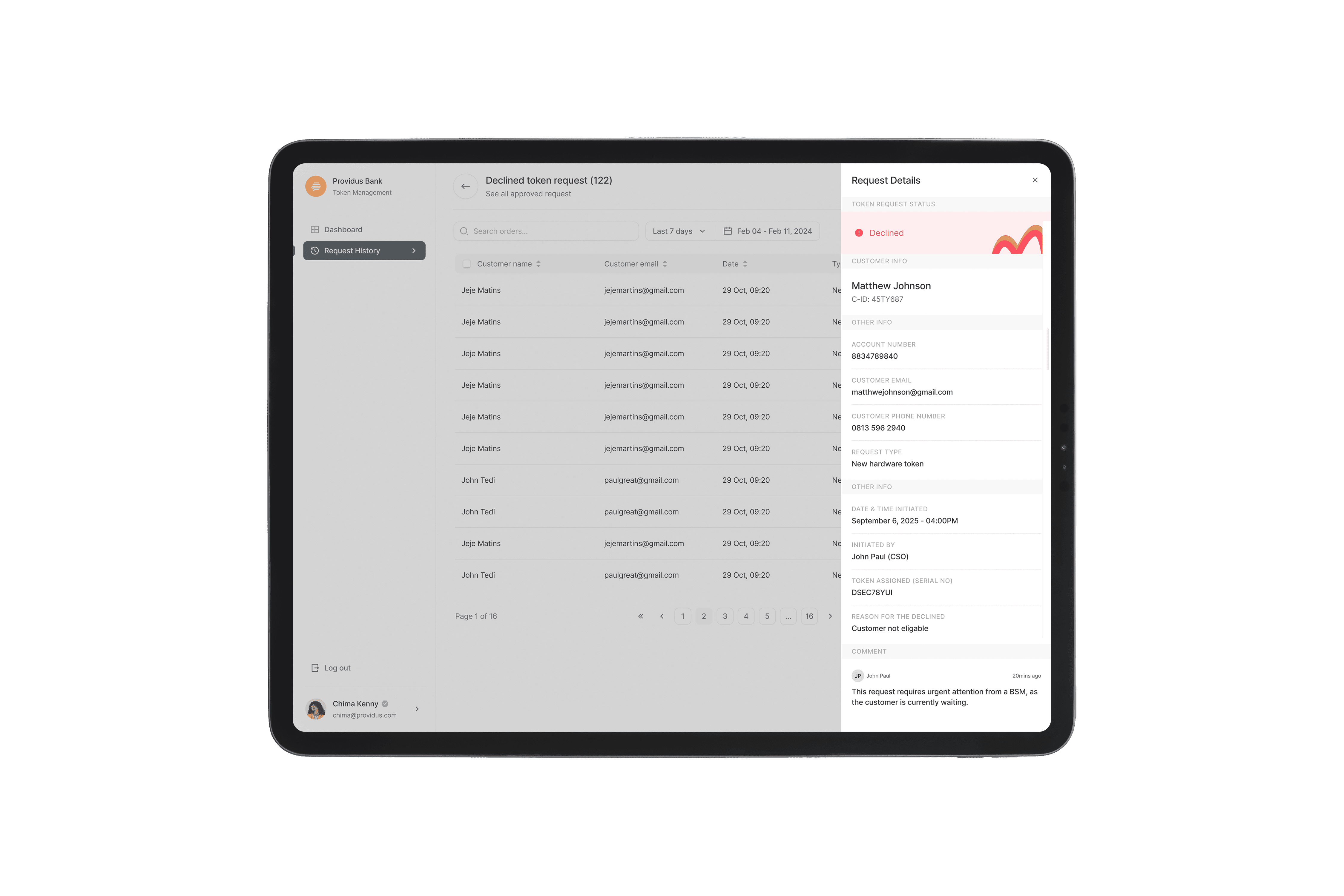
BSM FLOW
I designed the BSM approval experience to eliminate bottlenecks and provide clear visibility:
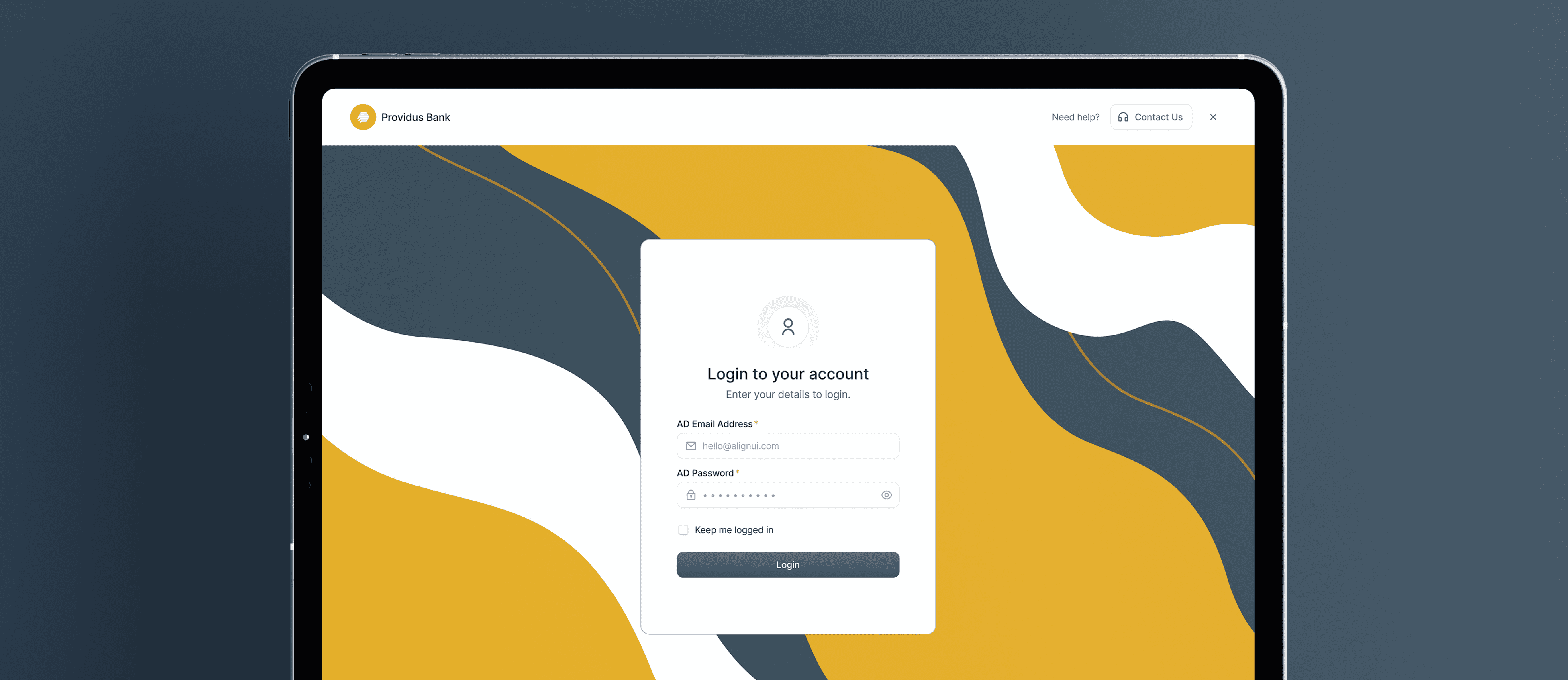
Onboarding & Access
BSMs receive an email invitation from the super admin and authenticate using their existing Active Directory credentials—no new passwords to remember.
Dashboard & Queue Management
Upon login, BSMs see a dashboard with request status cards and total counts, giving them immediate visibility into pending work.
Approval Flow
I designed a streamlined three-step approval process:
Review customer details and request information
Approve or reject with optional comments
System automatically notifies relevant teams
Progress Transparency
I added real-time status indicators that show background processes (charge deduction, notification sending) so BSMs understand what's happening even after they approve.
BSM FLOW
I designed the BSM approval experience to eliminate bottlenecks and provide clear visibility:
Onboarding & Access
BSMs receive an email invitation from the super admin and authenticate using their existing Active Directory credentials—no new passwords to remember.
Dashboard & Queue Management
Upon login, BSMs see a dashboard with request status cards and total counts, giving them immediate visibility into pending work.
Approval Flow
I designed a streamlined three-step approval process:
Review customer details and request information
Approve or reject with optional comments
System automatically notifies relevant teams
Progress Transparency
I added real-time status indicators that show background processes (charge deduction, notification sending) so BSMs understand what's happening even after they approve.
Userflow
Userflow
Users & Key Insights
Users & Key Insight
Users & Key Insights
Primary users:
Customer Service Officers (CSOs): Initiate requests and manage customer communication
Branch Service Managers (BSMs): Approve requests and ensure compliance
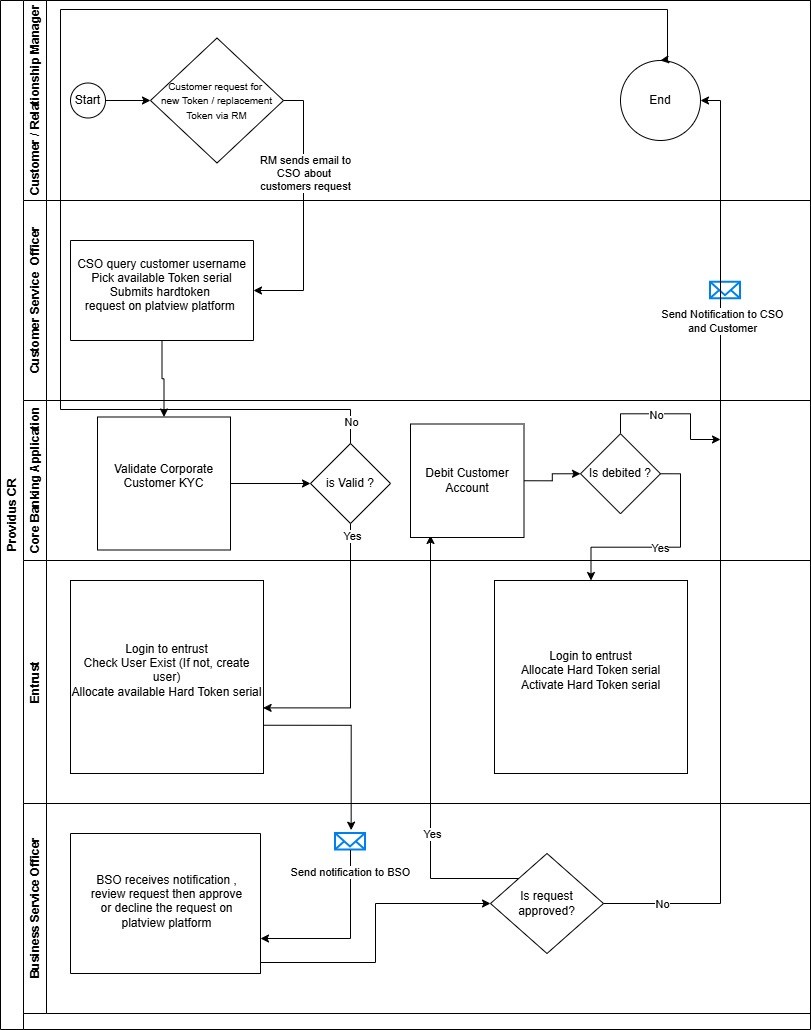
Relationship Managers (RMs): Communicate to CSO via email
Key insights
CSOs lacked visibility into request progress and struggled with constant context-switching across tools
BSMs needed clear approval queues and audit trails
Usability testing revealed the need for contextual comments on requests to improve handoffs between roles
Primary users:
Customer Service Officers (CSOs): Initiate requests and manage customer communication
Branch Service Managers (BSMs): Approve requests and ensure compliance
Relationship Managers (RMs): Communicate to CSO via email
Key insights
CSOs lacked visibility into request progress and struggled with constant context-switching across tools
BSMs needed clear approval queues and audit trails
Usability testing revealed the need for contextual comments on requests to improve handoffs between roles
Primary users:
Customer Service Officers (CSOs): Initiate requests and manage customer communication
Branch Service Managers (BSMs): Approve requests and ensure compliance
Relationship Managers (RMs): Communicate to CSO via email
Key insights
CSOs lacked visibility into request progress and struggled with constant context-switching across tools
BSMs needed clear approval queues and audit trails
Usability testing revealed the need for contextual comments on requests to improve handoffs between roles
The Problem
The Problem
The Problem
The existing token management platform created operational bottlenecks:
24–48 hour delays — Token charges were processed manually outside the system
Redundant handoffs — CSOs had to separately notify Funds Transfer for every charge deduction
No visibility — Disconnected systems caused tracking errors; BSOs couldn't give customers accurate updates
Rigid workflows — The platform couldn't be configured to match actual business processes"
The existing token management platform created operational bottlenecks:
24–48 hour delays — Token charges were processed manually outside the system
Redundant handoffs — CSOs had to separately notify Funds Transfer for every charge deduction
No visibility — Disconnected systems caused tracking errors; BSOs couldn't give customers accurate updates
Rigid workflows — The platform couldn't be configured to match actual business processes"
Overview
Overview
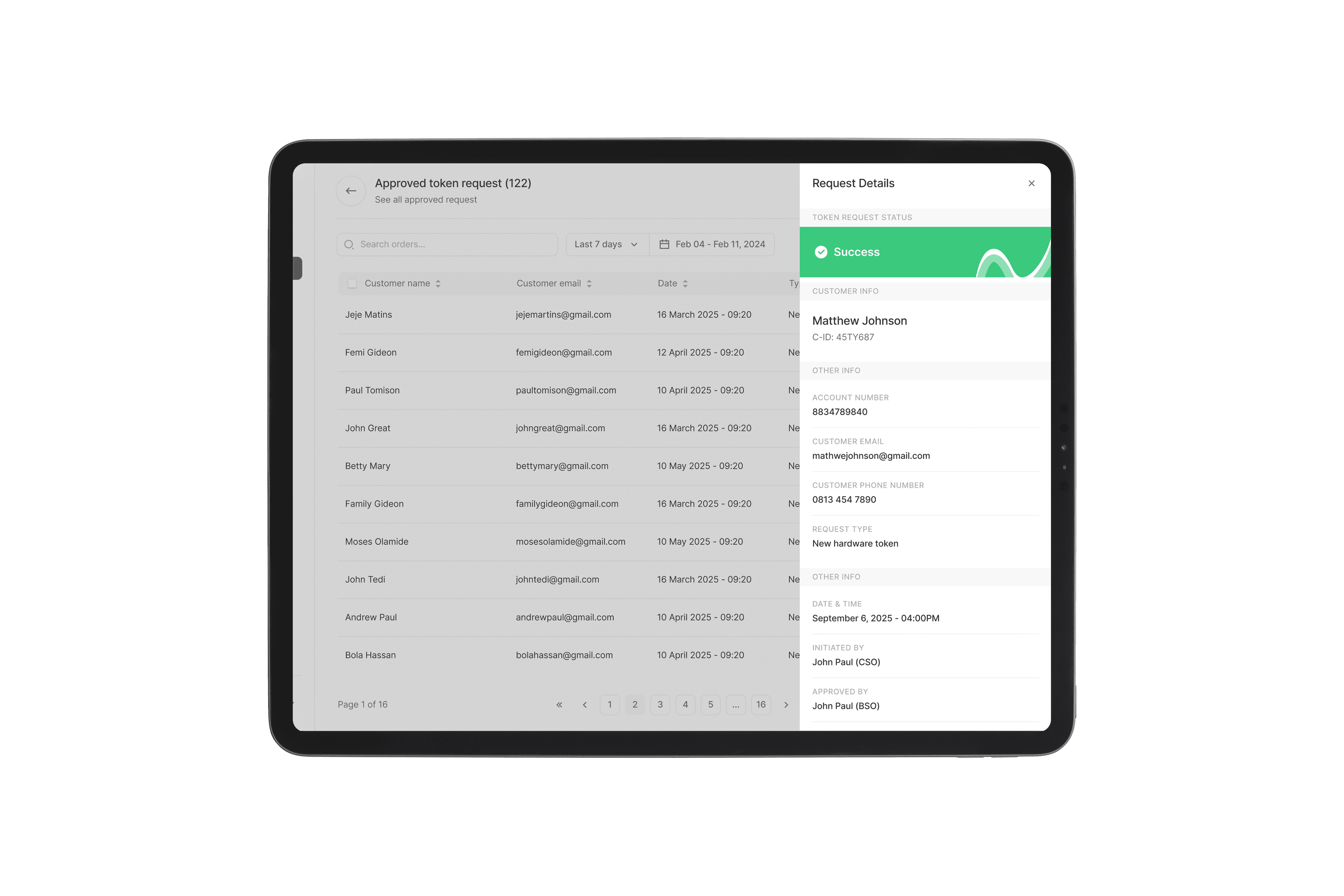
Providus Bank's customers waited weeks for security tokens while requests moved through fragmented manual processes—approvals were tracked in email threads, charges were handled in spreadsheets, and no one could see where requests stood.
I led the end-to-end redesign of the hard token management experience, mapping workflows across teams, identifying bottlenecks, and designing an automated system that gave users real-time visibility and reduced fulfillment time while maintaining strict banking compliance.
Providus Bank's customers waited weeks for security tokens while requests moved through fragmented manual processes—approvals were tracked in email threads, charges were handled in spreadsheets, and no one could see where requests stood.
I led the end-to-end redesign of the hard token management experience, mapping workflows across teams, identifying bottlenecks, and designing an automated system that gave users real-time visibility and reduced fulfillment time while maintaining strict banking compliance.
Got an Idea?
Got an Idea?
Got an Idea?
Got an Idea?
Share with me
Share with me
Share with me
Share with me
Say Hello
Ready for a design adventure, or need product design advice? Ping me for fun collaboration
Ready for a design adventure, or need product design advice? Ping me for fun collaboration
Ready for a design adventure, or need product design advice? Ping me for fun collaboration
Ready for a design adventure, or need product design advice? Ping me for fun collaboration